

كلا رمزي IP وIK مكوّن من رقمين يُطبعان على وحدة الإنارة، وغالبًا ما يجري الخلط بينهما في المواصفات. يشير IP إلى المعيار IEC 60529، ويجيب عن سؤال: هل يتسرب الماء أو الغبار إلى الداخل؟ أما IK فيشير إلى المعيار IEC 62262، ويجيب عن سؤال: هل يتحمل الهيكل الصدمات؟ قد تكون وحدة الإنارة مصنفة IP66 وIK04، وهذا مناسب لسقف، لكنه غير ملائم عند مستوى الركبة بجوار عربة أمتعة. ينبغي إدراج كلا الرقمين في جدول المواصفات، فهما يجيبان عن سؤالين مختلفين تمامًا. وكثيرًا ما يُنسخ أحدهما خطأً من الآخر، فتُحدَّد وحدة إنارة بمستوى متانة يفوق متانتها الفعلية بثلاثة أضعاف.
1. تصنيفان ونمطان مختلفان للأعطال
تبدو الأعطال مختلفة في الموقع. فعطل IP تدريجي: يتسرب الماء، ويتآكل مشغّل الإنارة، ثم تبدأ الوحدة بالوميض قبل أن تتوقف عن العمل. أما عطل IK فيكون فوريًا: ناشر ضوء متصدع، أو هيكل منبعج، وأحيانًا عدسة محطمة على الأرض بعد صدمة واحدة.
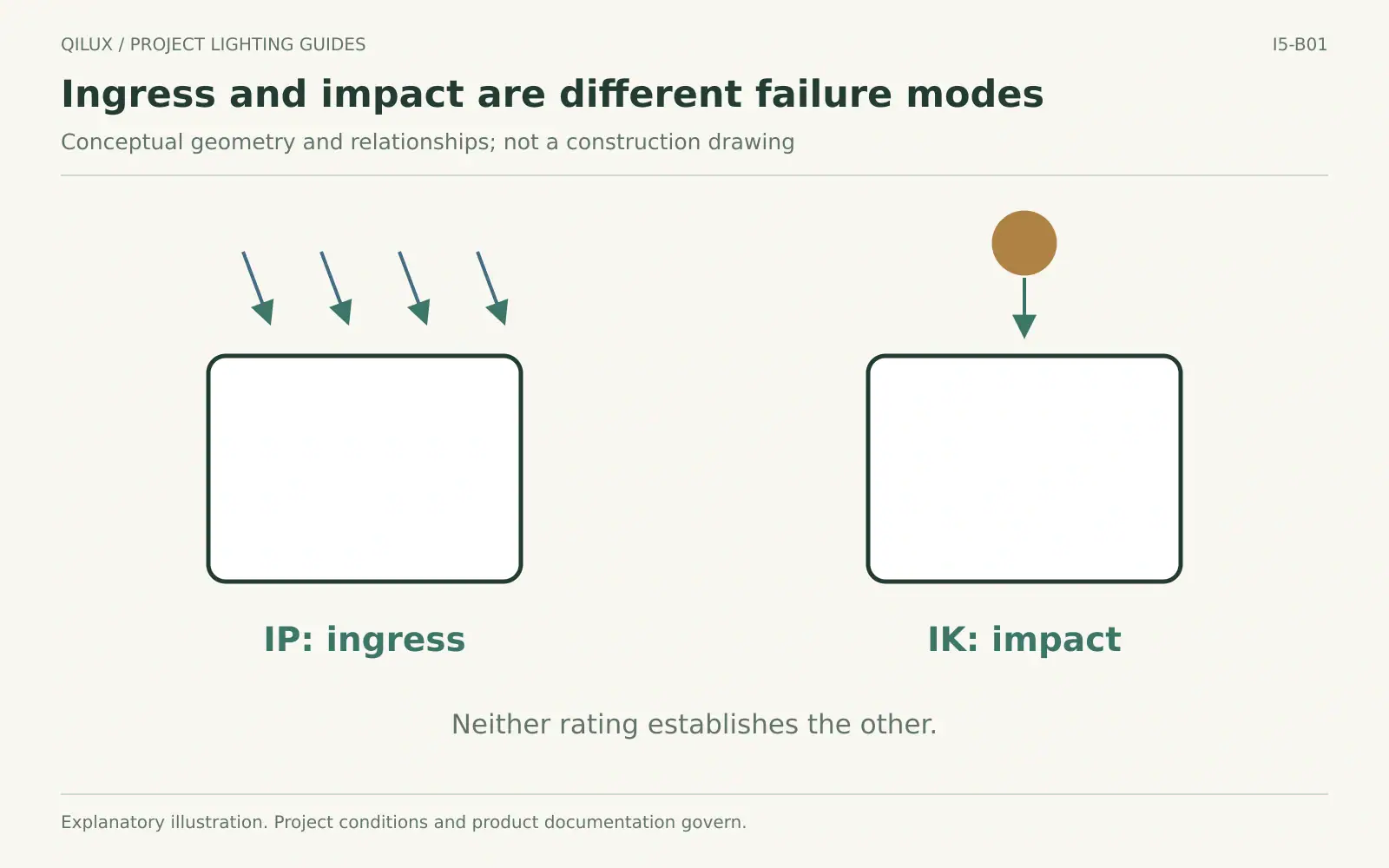
تناولنا تصنيف IP بالتفصيل في مواضع أخرى، لذا إليك خلاصة موجزة: يشير الرقم الأول إلى الأجسام الصلبة من 0 إلى 6، والثاني إلى الماء من 0 إلى 8، وينطبق التصنيف على وحدة الإنارة كاملةً كما اختُبرت. أما IK، فيُعبَّر عنه برمز واحد من 00 إلى 10، ويقيس طاقة الصدمة التي يتحملها الغلاف من دون أن تتأثر قدرته على الحماية.
والتفصيل الدقيق المهم هو أن IK ليس خاصية مستقلة. فبمجرد انبعاج الهيكل أو تشوّه موضع الحشية، يفقد تصنيف IP صلاحيته. وأي صدمة تُبقي وحدة الإنارة عاملة لكنها تشوّه شكلها ستسمح بتسرب الماء إليها طوال ما تبقى من عمرها. لذلك يجب أن تتضمن مواصفات الإنارة الخارجية وإنارة الأماكن العامة كلا الرقمين، لا الاكتفاء بالأعلى منهما.
2. آلية اختبار IK
يُختبر IK باستخدام أداة صدم: مطرقة بندولية للقيم الأقل، أو مطرقة سقوط حر للقيم الأعلى. تُسقط الأداة على العينة أو تُؤرجح لتصطدم بها عند نقاط محددة، عادةً في خمس ضربات. وتُحدَّد الطاقة بحسب الكتلة وارتفاع السقوط، ثم يسجل الاختبار أعلى طاقة تحمّلتها العينة من دون حدوث ضرر يضعف الحماية.
ثمة شرطـان يجدر معرفتهما، لأنهما يفسران الأعطال الميدانية. يُجرى الاختبار عند درجة حرارة المختبر المحيطة، مع أن سلوك البوليمرات يختلف كثيرًا عند 0 °م أو عند 50 °م تحت أشعة الشمس. فقد يتصدع ناشر ضوء من البولي كربونات مصنف IK08 عند 23 °م إذا تعرض لدرجة 5 °م في موقع تركيب شتوي. كذلك تُوجَّه الضربات في الاختبار إلى أضعف نقطة يمكن الوصول إليها، لا إلى أقوى نقطة؛ لذا فإن التصنيف المذكور للهيكل لا يكشف إلا القليل عن العدسة إذا كانت مستبعدة من الاختبار.
| IK | طاقة الصدمة | ما يعادلها تقريبًا |
|---|---|---|
| IK00 | لا توجد حماية | — |
| IK01 | 0.14 جول | طرقة خفيفة |
| IK02 | 0.20 جول | ملامسة اليد لسطح صلب |
| IK03 | 0.35 جول | أداة سقطت من ارتفاع 100 مم |
| IK04 | 0.50 جول | جسم كتلته 0.5 كغ من ارتفاع 100 مم |
| IK05 | 0.70 جول | جسم كتلته 0.7 كغ من ارتفاع 100 مم |
| IK06 | 1.0 جول | جسم كتلته 1 كغ من ارتفاع 100 مم |
| IK07 | 2.0 جول | جسم كتلته 1 كغ من ارتفاع 200 مم |
| IK08 | 5.0 جول | جسم كتلته 1.7 كغ من ارتفاع 300 مم |
| IK09 | 10.0 جول | جسم كتلته 5 كغ يسقط من ارتفاع 200 مم |
| IK10 | 20.0 جول | جسم كتلته 5 كغ يسقط من ارتفاع 400 مم |
تؤدي القفزة من IK08 إلى IK09 إلى مضاعفة الطاقة، ثم تتضاعف مجددًا عند الانتقال من IK09 إلى IK10. ولهذا تكون وحدات الإنارة IK10 أثقل بكثير وأكثر تكلفة: إذ لا بد من تغيير سُمك الجدار ومادة العدسة، وليس الحشية وحدها.
3. مقارنة IK08 وIK10 في التركيبات الفعلية
تُعدّ IK08، بطاقة 5 جول، الخيار الافتراضي المعقول لأي شيء يمكن لشخص أو لعربة الوصول إليه. فهي تتحمل ارتطام حقيبة كتف، أو دلو تنظيف، أو عجلة عربة أمتعة، ومعظم الصدمات العرضية بسُلّم صيانة. وفي ممرات الفنادق، ومصابيح الجدران في غرف النزلاء، وإنارة الممرات، ووحدات الإنارة في الشرفات، فإن IK08 هي الدرجة التي ينبغي اعتمادها.
أما IK10، بطاقة 20 جول، فتوفر مقاومة للتخريب بالمعنى الحرفي: ضربة متعمدة بمطرقة أو زجاجة. وهي مناسبة للمراحيض العامة، ومحطات النقل، والمنشآت الرياضية، ومواقف السيارات، وأي منطقة غير خاضعة للإشراف حيث قد تتعرض وحدات الإنارة للركل. ومن الشائع استخدام عدسة من البولي كربونات على هيكل مصبوب بالضغط؛ ونادرًا ما تبلغ العدسة الزجاجية تصنيف IK10 من دون واقٍ قابل للاستبدال.
وهذه المفاضلات حقيقية. فجسم وحدة IK10 أثقل، ما يغيّر تفاصيل التثبيت — فوحدة إنارة جدارية تتطلب أربعة مراسٍ M6 بدلًا من اثنين تختلف من حيث تكلفة التركيب. وتمتص عدسة البولي كربونات السميكة الضوء ويصفرّ لونها بفعل الأشعة فوق البنفسجية، لذا قد تعطي وحدة IK10 الخارجية ضوءًا أقل بنسبة 8–10% بعد خمس سنوات مقارنةً بوحدة IK08 ذات العدسة الزجاجية. وفي منتجع على شاطئ البحر، قد تكون هذه المفاضلة في غير محلها، وغالبًا ما تكون IK08 مع ناشر ضوء من الزجاج المقسّى خيارًا أفضل.
وثمة فارق آخر: IK ليس تصنيفًا لتحمّل الأحمال. فمصباح أرضي غاطس يمشي الناس عليه يحتاج إلى قيمة حمل ساكن بوحدة النيوتن، تُختبر على نحو مستقل، وتصنيف IK10 لا يبيّن شيئًا عن قدرته على تحمّل كعب حذاء ذي كعب رفيع.
The lens material decides most of it. Tempered glass at 4–5 mm reaches IK08 comfortably and holds its transmission for a decade. Laminated glass adds a plastic interlayer that holds fragments in place after a break, which matters in a public area and costs roughly 15% more. Polycarbonate reaches IK10 easily but scratches, yellows and needs a UV-stable grade; it is the right choice where vandalism is expected and the wrong one where light quality matters. Acrylic sits between the two, with better clarity than polycarbonate and worse impact performance.
4. Where impact matters in hotels
The exposure is predictable once you map it against height and traffic. Two zones cover almost everything.
Knee to shoulder height, in circulation areas. Corridor wall lights, lift lobby fittings, restaurant wall washers at booth height, path lights and bollards. Trolleys, luggage and cleaning machines all travel at this height, and this is where IK08 is the minimum and IK10 is common in back-of-house corridors.
Floor level, in public and semi-public areas. Step lights, deck lights, uplights at the base of a wall, floor washers in a lobby. These take feet, cases and dragged furniture. Specify IK08 for a hotel and IK10 for a public building, and always check the load rating separately if the surface is walked on.
Three positions are usually under-specified. Guest bathroom fittings below 1.2 m, where a hairdryer or a cleaning cart hits the mirror light. Pool deck fittings, where a wet floor plus a trolley is the worst combination. And service corridor fittings, where cages and laundry carts are pushed against the wall daily.
Above 2.4 m, impact is rarely a design driver except in sports halls and atriums where balls or maintenance access come into play. That is the one place where spending on IK is usually wasted, and the money is better spent on the IP and the finish.
5. Specifying IP and IK together
Write both numbers against the location, in the schedule, with the material that delivers them. A single sentence per row is enough: “IP65, IK08, die-cast aluminium body, 4 mm tempered glass, A4 fixings.”

| الموقع | IP | IK | Note |
|---|---|---|---|
| Guestroom ceiling, corridor ceiling | IP20 | غير مطلوب | Out of reach |
| Guestroom wall light | IP20–IP44 | IK07–IK08 | Below 1.2 m, cleaning contact |
| Bathroom mirror light | IP44 | IK07 | Hairdryer and cart contact |
| Corridor wall light, back of house | IP20–IP54 | IK10 | Trolley traffic |
| Terrace and path light | IP65 | IK08 | Trolleys, cases |
| Pool deck, step light | IP67 | IK08–IK10 | Wet floor plus trolley |
| Car park, service area | IP54–IP65 | IK10 | Vehicles, vandalism |
| Public toilet, transport area | IP44–IP65 | IK10 | Deliberate damage |
Installation damage deserves its own line. A fitting rated IK08 can be destroyed during commissioning by an impact driver set too high, or by a ladder placed against a wall light. On projects with a high fit-out turnover, specify a protective film on the lens until handover, and ask the contractor to record any fitting that was struck during installation. The damage rarely shows as a crack; it shows as a hairline in the diffuser that opens in the first cold snap.
Three clauses close the gaps that a bare number leaves open. Require the IK report for the exact model, with the lens in place and unmasked. Require the test temperature, or at least confirm the material is rated for the site’s low temperature. And require that the IP report and the IK report cover the same configuration, because a common trick is to submit an IK report for the body and an IP report for a different variant.
On a coastal site, add the corrosion class to the same row. IP and IK can both be satisfied by a fitting that dissolves at the fixings, and the material column is what prevents it — the arguments are set out in the coastal lighting guide.
Finally, check the interaction at design stage rather than at commissioning. An IK10 lens is thicker, absorbs more light and runs hotter; if the fitting is also sealed to IP65, the driver may be running 10 K above its rated condition. Ask for the lumen output and the driver case temperature in the proposed configuration, not only the catalogue headline figures.
الخطوة التالية
For public areas, back-of-house corridors and exterior circulation, impact resistance is as much a maintenance decision as a security one. Our public space lighting solutions set out the IP and IK pairing we use per location, and صفحة الإمكانات lists the impact and ingress reports available for each family. If the project has a mix of guest, public and service areas, send the schedule through the commercial project desk and it will come back with both ratings specified per row, plus the fixing detail that makes them hold.